


Complete Guide to Drenching Large Ruminants
Meta title: Complete Guide to Drenching Large Ruminants
Meta description: Educational guide to safe oral drenching for cattle, sheep, goats and camels—covering drug classes, timing, technique, dosing accuracy and compliance.
Keywords: drenching medicines for cattle - oral drench for sheep - goat drenching dose - camel deworming drench - drench gun technique - faecal egg count FEC - withdrawal period livestock
Introduction

Drenching plays a vital role in herd health and farm profitability by maintaining animal productivity, reducing disease losses, and improving feed efficiency. It supports overall welfare and sustainable livestock management.
Drenching is the practice of administering liquids orally to livestock. While the term often refers to anthelmintic or flukicidal treatments for internal parasites such as liver, intestinal and lung worms, oral drenches can also deliver supplements (e.g., vitamins, minerals or propylene‑glycol energy solutions) during stressful periods like post‑calving. In large ruminants—cattle, sheep, goats and camels—effective drenching forms part of a broader parasite control plan and should be guided by veterinary advice and product labels. This guide explains the main classes of drench medicines, preparation and technique, and key safety considerations.
Types of drenching medicines
Anthelmintics
Anthelmintics are used to target internal parasites such as gastrointestinal and lungworms. They include several major drug families that differ in mode of action and spectrum.

Flukicides
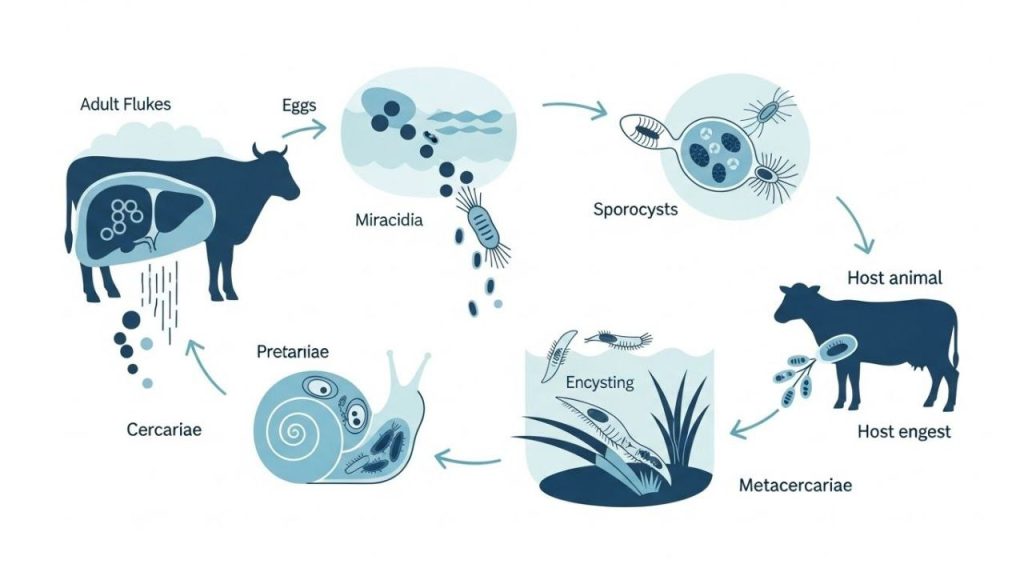
Flukicides are designed to control liver and rumen fluke infections that cause major productivity losses in grazing stock.

Combination drenches
Combination products merge two or more actives—typically a wormer and flukicide—to broaden parasite coverage.

Vitamin and energy drenches
Supplemental drenches supply vitamins, minerals or energy to animals recovering from illness or heavy production demands. They are often used after calving, lambing or kidding to correct deficiencies or prevent metabolic disease. Examples include multivitamin mixtures, calcium‑phosphorus solutions to avert milk fever, and propylene‑glycol energy drenches. These complement—not replace—diagnostics or antiparasitics. Always confirm compatibility if giving them near in time to worm treatments. Such supplements should be selected on veterinary advice and never mask underlying issues; for instance, a rough coat or poor appetite may indicate unresolved worm burdens.
Example combination drench (levamisole + oxyclozanide)

Combination products containing levamisole hydrochloride and oxyclozanide offer broad control of gastrointestinal and pulmonary nematodes and adult liver fluke. According to the UK Veterinary Medicines Directorate, a licensed formulation with 3% levamisole HCl and 6% oxyclozanide is used to treat and control mature and developing intestinal and lung worms and removes most mature Fasciola species (VMD DEFRA). The product is given as an oral suspension; dosing must be based on accurate body weight, using an appropriate drench gun, and the container should be shaken to ensure both actives are evenly suspended. Signs of overdose include muscle tremors, salivation and collapse, so adherence to label instructions is critical. Such combinations are valuable where both worms and fluke are present, but they must be integrated into a broader control plan.
Preparation for drenching
Indications & FEC

Begin by determining if drenching is necessary through faecal egg counts (FEC) and risk assessment rather than fixed schedules.
- Assess need: Use FECs and risk factors instead of routine drenching; targeted treatments help slow resistance.
Weighing & Calibration

Accurate weighing and proper calibration ensure correct dosing and effective treatment.
- Weigh animals accurately: Underdosing leads to resistance, while overdosing can cause toxicity. Weigh or use a bodyweight tape and base doses on the heaviest animal or groups of similar size (Cattle Parasites UK).
- Calibrate drench equipment: Calibrate oral dosing guns for the heaviest animals and check regularly (Maryland Small Ruminant Page).
Fasting & Handling
Proper fasting and calm handling improve medicine absorption and animal safety.
- Fasting improves efficacy: Deliver the dose over the back of the tongue into the oesophagus to prevent the oesophageal groove reflex. Withhold solid feed for about 12 hours before drenching to enhance absorption of benzimidazoles and ivermectin (Maryland Small Ruminant Page). Ensure animals always have access to water.
- Check pregnancy status: Avoid albendazole or triclabendazole during the first 45 days of pregnancy (Beef Cattle Extension); follow label directions for later gestation.
- Prepare the animals: Handle calmly in a crush or race; stress and dehydration increase the risk of levamisole toxicity (PubMed).
Safe drenching technique
- 1- Restrain securely: Use appropriate head gates or races for cattle and small pens for sheep and goats. Calm handling reduces stress and choking risk.
- 2- Position the head: Hold the animal’s head slightly up. For sheep and goats, turn the head to one side. Do not over‑extend the neck.
- 3- Insert the nozzle: Slide the nozzle of the drench gun through the gap in the teeth and over the back of the tongue (Maryland Small Ruminant Page).
- 4- Deliver slowly: Depress the trigger steadily, allowing the animal to swallow. Avoid squirting the medicine into the cheek pouch, which can bypass the rumen.
- 5- Observe and record: Hold the animal briefly after dosing to ensure swallowing. Mark treated animals and record the product, date and dose for withdrawal compliance.
Aftercare and resistance management

- Do not move immediately to clean pasture: Keeping animals in their current paddock for 24–48 hours after treatment allows any eggs passed by surviving worms to mix with a larger population of susceptible larvae, maintaining refugia and slowing resistance.
- Maintain refugia: Leave a small proportion of the healthiest animals untreated to preserve a population of susceptible worms; this dilutes resistant genes in the pasture.
- Repeat FECs: Perform a post‑treatment faecal egg count about 7–14 days after drenching to check efficacy. Consult a veterinarian if worm eggs remain high.
- Rotate or combine actives: Use different classes or combination drenches strategically rather than repeatedly relying on one product.
Cautions and pregnancy considerations
- Albendazole and triclabendazole: These benzimidazole and flukicide products are contraindicated during the first month and a half of pregnancy (Beef Cattle Extension). Treat animals either before mating or later in gestation under veterinary guidance.
- Levamisole safety: Levamisole has a narrow margin of safety. Overdosing or treating dehydrated/stressed animals can lead to toxicity (salivation, tremors, collapse) (PubMed). Always dose by weight.
- Closantel and oxyclozanide: Overdosage may cause neurological signs and digestive upset (VMD DEFRA). Never exceed recommended rates; shake combination products to avoid uneven dosing.
- Withdrawal periods: Meat and milk withdrawal times vary by product and must be checked on the label. Some products are not approved for lactating animals (VMD DEFRA).
- Antibiotic drenches: Oral antibiotics should only be given under veterinary prescription for specific indications; they are not routine parasite treatments.
Additional support for respiratory health
While parasite management is the main focus of this guide, respiratory support complements overall herd health by helping animals recover faster and maintain productivity.
Natural formulations containing essential oils can support the respiratory system during outbreaks of pneumonia or after antibiotic therapy. Menthizer—a eucalyptus‑ and menthol‑based supplement from Maizer—is designed for respiratory issues and has been used across sheep, goats, calves and poultry. Maizer reports that it is particularly helpful during two critical phases: early intervention to halt mild symptoms and post‑antibiotic recovery to sustain respiratory resilience. Such products are not antiparasitic; they aim to soothe airways and should be used alongside veterinary treatment plans. For more information, see Maizer’s blog.
Conclusion
Drenching large ruminants is a powerful tool for controlling internal parasites and supporting animals through periods of stress. Success relies on selecting the right medicine for the parasites present, weighing animals accurately, calibrating equipment and delivering the dose over the back of the tongue. Strategic fasting and careful handling enhance drug efficacy, while leaving a portion of the herd untreated maintains refugia and prolongs the useful life of anthelmintics. Always follow label instructions, observe withdrawal periods and consult a veterinarian—especially when treating pregnant animals or dealing with fluke infections. Integrated parasite management combined with good nutrition and respiratory care will help keep cattle, sheep, goats and camels healthy and productive.
References & Hyperlinks
Practice guidance
– Sheep and Goat – Slow drug resistance
– Cattle Parasites UK – Control of liver and rumen fluke
Regulatory
– VMD DEFRA – Product information
– European Medicines Agency – Veterinary guidance
– EU Regulation 2019/6 – Veterinary medicinal products
Research / Case reports
– Beef Cattle Extension – Pregnant cows deworming
– PubMed – Levamisole intoxication in calves
Company resources
– Maizer – Official site
– Maizer blog – Livestock health news
Note: Links are grouped by source type for clarity. Inline [source] tags can be added to key statements for transparency.

